
Yoni Steaming Herbs: A Safety-First Guide to Creating a Gentle Practice
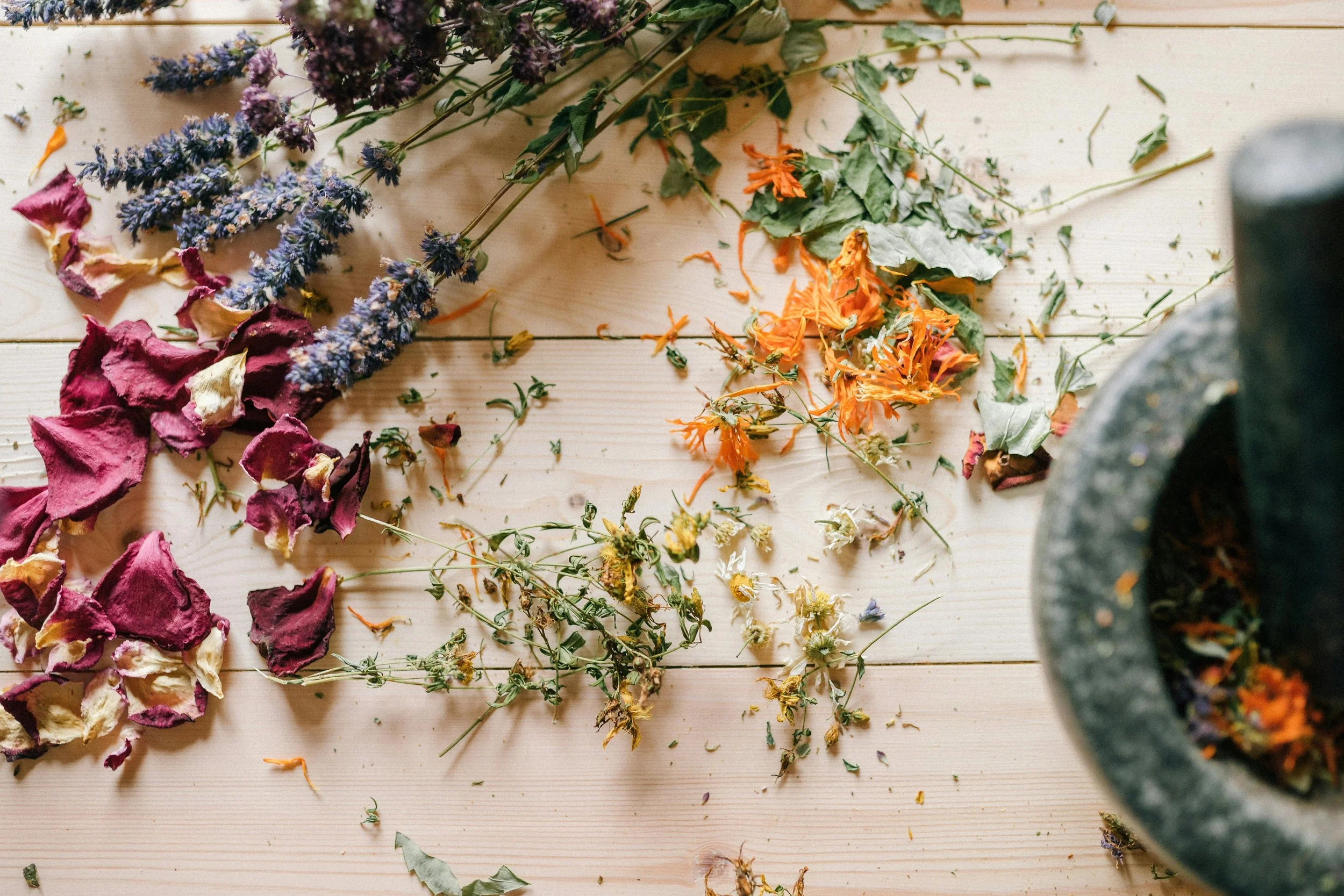
Yoni steaming—sometimes called vaginal or vulvar steaming—is an ancient practice that has been carried through many cultures as a form of ritual care, rest, and feminine reconnection.
In recent years, it has re-entered modern wellness spaces, often surrounded by bold claims, conflicting advice, and a fair amount of confusion.
This post offers a grounded, educational overview of yoni steaming herbs and how to approach a yoni steaming practice gently and safely, without pressure, excess, or unrealistic promises.
This is not medical advice. It’s an invitation to slow down, learn, and make informed choices that honor the sensitivity of the body.
What is yoni steaming?
Yoni steaming involves sitting or squatting over warm (not hot) steam infused with herbs, allowing warmth and aromatic moisture to rise toward the vulva.
Traditionally, this practice has been associated with:
ritual rest
postpartum care in some cultures
transitions between cycles or life phases
embodied self-connection
From a modern, evidence-based perspective, it’s important to understand that the vagina is self-cleaning, and yoni steaming is not necessary for hygiene or health.
If practiced, yoni steaming should be approached as a ritual or self-care experience, not a treatment or cure.
Important safety considerations (please read first)
Before exploring yoni steaming, it’s essential to name the risks and contraindications clearly.
Yoni steaming is not recommended if you:
are pregnant or think you may be
have an active vaginal infection (yeast, BV, STI)
have open wounds, irritation, or inflammation
have recently had gynecological procedures or surgery
experience chronic vulvar sensitivity
are on on your period
are unsure about heat tolerance in this area
Burns and irritation are real risks. Steam should always feel comfortably warm, never hot. If there is pain, stinging, numbness, or discomfort at any point, the practice should stop immediately. When in doubt, skip steaming and choose gentler alternatives.
Choosing herbs for yoni steaming
When approached with care, yoni steaming can be a simple, grounding ritual of warmth, presence, and connection.
In my own practice, I work with a small selection of herbs that feel supportive, familiar to the body, and appropriate for external use with steam. These are plants I’ve used personally and feel confident recommending for a gentle yoni steaming practice.
As always, simplicity matters more than intensity.
Rose
Rose is one of the most supportive herbs for yoni steaming. It offers a soft, heart-opening quality and brings a sense of tenderness to the ritual. Rose is less about “doing” something to the body and more about creating an atmosphere of care, reverence, and emotional ease.
Calendula
Calendula is grounding, gentle, and supportive for sensitive tissues. It carries a feeling of nourishment and steadiness and pairs beautifully with rose. Calendula is often chosen when the intention is softness, restoration, and slowing down.
Mugwort
Mugwort is a traditional plant associated with the womb, intuition, and cyclical awareness. In yoni steaming, mugwort brings a slightly warming, aromatic quality that many women experience as clarifying and connective. It should be used in modest amounts and with attention to how your body responds.
Motherwort
Motherwort has a distinct presence—supportive, grounding, and emotionally steadying. In steaming, it can be especially resonant when the intention is reconnecting with inner authority, boundaries, or emotional truth. Like mugwort, a little goes a long way.
Basil
Basil adds a bright, uplifting aromatic note to a steam blend. It brings warmth and clarity without being overwhelming when used lightly. Basil can be supportive when the body feels dull, stagnant, or in need of gentle stimulation.
Lavender
Lavender offers calming, nervous-system–supportive qualities and can help the body soften into rest. It’s best used sparingly, as its aroma is strong, but in small amounts it can bring ease and relaxation to the practice.
Simple guidelines for herbal steaming
When preparing a yoni steam:
Use 1–2 tablespoons total herbs
Choose no more than 2–3 herbs per blend
Let the water cool slightly before beginning your steam
Steam times vary. Many women find anywhere from 10–30 minutes supportive, depending on heat, herbs, and personal sensitivity.
The steam should feel comfortably warm—not hot.
The body should feel relaxed, nourished, and at ease during and after the practice.
Whenever possible, choose organic herbs from a trusted source and avoid blends containing essential oils or synthetic fragrances.
If discomfort, irritation, or dryness arises, it’s wise to stop and shorten future sessions.
Creating a gentle yoni steaming ritual
This practice should feel slow, optional, and spacious—never intense or goal-oriented.
1. Prepare the space
Choose a quiet, private space where you won’t be rushed.
Have water or tea nearby and a towel or blanket to stay warm.
2. Prepare the steam
Boil water, then remove it from heat
Add 1–2 tablespoons of dried herbs
Let steep for 10 minutes or until the water is at the right temperature for your body
Again, make sure to let the water cool slightly before use
The steam should feel warm, not hot.
3. Position safely
Sit or squat at a comfortable distance above the steam. Many women choose to use a stool with a hole in the center, specifically designed for this purpose. Alternatively, place a steel bowl of your herbal mixture in the toilet bowl and sit on it.
Never place skin directly over boiling water.
Your vulva should feel warmth—not heat.
4. Keep it brief
10–15 minutes may be plenty. Longer does not mean better. Trust your body knows when you’ve had enough.
5. Aftercare
After steaming:
rest
hydrate
notice how your body feels over the next 24 hours
discontinue if any irritation occurs
A ritual lens
If yoni steaming is practiced, it can be held as a ritual of presence.
I enjoy pairing my yoni steaming practice with:
journaling
breath awareness
intention setting
rest
The most important ingredient is not the herbs—it’s attention and consent from the body.
Gentle alternatives to yoni steaming
If steaming doesn’t feel right (or safe) for your body, there are many supportive alternatives:
warm baths (with or without herbs)
gentle abdominal massage
nervous system regulation practices
pelvic-focused breathwork
cycle tracking and body awareness (I have many free resources to support cycle awareness here)
Often, these approaches offer similar benefits without risk.
Listening to your body is the practice
Yoni steaming is not required for healing, femininity, or self-connection.
For many women, the deeper work is learning to:
notice subtle body cues
respond to discomfort early
honor rest without ritualizing intensity
That self-awareness is what builds embodied trust.
Want a gentle, grounded path into body wisdom?
If you’re interested in embodied self-care, nervous system regulation, womb healing, and cycle awareness—the Body Wisdom Workshop online course offers a gentle, self-guided approach.
Inside, we explore:
body literacy and self-trust
nervous system-informed practices
cycle-aligned self-care
listening to the body without pressure
ritual practices
—> Learn more about the Body Wisdom Workshop here.
Final note
This post is educational only and not a substitute for medical care. If you have gynecological concerns, pain, or symptoms, please consult a qualified healthcare provider. Your body deserves care that is informed, respectful, and safe.
About Ebb & Flow: Ebb & Flow is the holistic women’s mentoring practice of Emma Brinkman. Through menstrual education, women’s mentoring, somatic practice, feminine ritual, and herbalism, Ebb & Flow works to connect women to the power and wisdom within their bodies, in order to live more easeful, sensual, vibrant, and empowered lives. Follow along to stay up-to-date on blog posts and articles, and check out all of Emma’s offerings, which include 1:1 mentoring, monthly online women’s circles, online courses, and custom ritual guidance for navigating life’s transitions.
