
Natural Remedies for Your Period: Herbs, Nervous System Support, and Menstrual Care
For women, the menstrual cycle is not just a biological event but also an opportunity to enter into an ongoing conversation with our bodies. Our periods often reflect how supported — or unsupported — our nervous system, hormones, and emotional landscape feel.
The menstrual cycle is often described as the fifth vital sign, offering valuable insight into the overall health and wellbeing of the body. Changes in pain, flow, mood, or energy can signal that one or more systems are under strain — whether hormonal, nervous, emotional, or lifestyle-related.
Rather than viewing menstrual discomfort as something to silence, this perspective invites a gentle inquiry into where life may be pulling us out of balance. At the same time, the bleeding phase calls for intentional slowing down. Rest, warmth, and inward attention are not luxuries during menstruation, but essential supports that help ease discomfort and allow the body to recalibrate in its own time.
When menstrual pain, heaviness, fatigue, or emotional sensitivity arise, the invitation is not to override or suppress what is happening. Instead, cyclical and feminine healing traditions remind us to listen closely and respond with care.
Natural remedies for your period offer a way to work with the body rather than against it. Herbal allies, in particular, have long been used to ease menstrual discomfort, nourish depleted systems, and support the rhythmic intelligence of the womb.
This post explores some of the most supportive herbs for menstruation, along with a few complementary nervous system and somatic tools to deepen relief and connection to your womb space.
Herbal Allies for Menstrual Support
Herbs work gently and cumulatively, supporting the body’s innate capacity for balance. While they are not a replacement for medical care when needed, they can be powerful companions for relieving menstrual pain, regulatng the cycle, and supporting overall womb wellness.
Below are some commonly used herbal allies for the menstrual cycle, particularly during bleeding days.
Ginger (Zingiber officinale)
Ginger is one of the most accessible and effective herbs for menstrual pain. It is warming, circulatory, and anti-inflammatory, making it especially helpful for cramps caused by stagnation or tension.
Ginger supports healthy blood flow to the pelvic area and can ease nausea, bloating, and digestive discomfort that sometimes accompany menstruation. It is often used as a tea or decoction (the root simmered over low heat for at least 15 minutes) during the first days of bleeding.
This herb is particularly supportive for women who experience coldness, clotting, or sharp cramping sensations.
Cinnamon (Cinnamomum verum or Cinnamomum cassia)
Cinnamon is another warming herb that supports circulation and helps relax uterine tension. Traditionally used to ease cramping and menstrual discomfort, cinnamon can also support blood sugar balance, which may help stabilize mood and energy during the cycle.
Cinnamon pairs beautifully with ginger in tea, creating a comforting and grounding blend for menstruation. Its aromatic quality can also offer emotional warmth and a sense of safety during inward-focused days.
Cinnamon can also be used pre-menstrually to offset blood sugar spikes, which are more common during the pre-menstrual phase of the cycle.
Red Raspberry Leaf (Rubus idaeus)
Red raspberry leaf is a classic uterine tonic known for its affinity with the reproductive system. Rather than acting as a quick pain reliever, this herb works best when used consistently across cycles.
It supports tone and function of the uterine muscles, which may help reduce cramping over time and support a more balanced menstrual flow. Red raspberry leaf is also mineral-rich, offering gentle nourishment during menstruation.
This herb is often taken as an infusion and is suitable for long-term cyclical support.
Nettle (Urtica dioica)
Nettle is deeply nourishing and mineral-dense, making it especially helpful for women who experience fatigue, heavy bleeding, or depletion around their period.
Rich in iron, calcium, magnesium, and trace minerals, nettle supports blood health and overall vitality. Its strengthening and replenishing qualities can indirectly reduce menstrual discomfort by supporting the body’s reserves.
Nettle is best taken as a strong, long-steeped infusion (2 tablespoons in a quart jar of boiling water, steeped overnight) and is supportive throughout the cycle, not only during bleeding days.
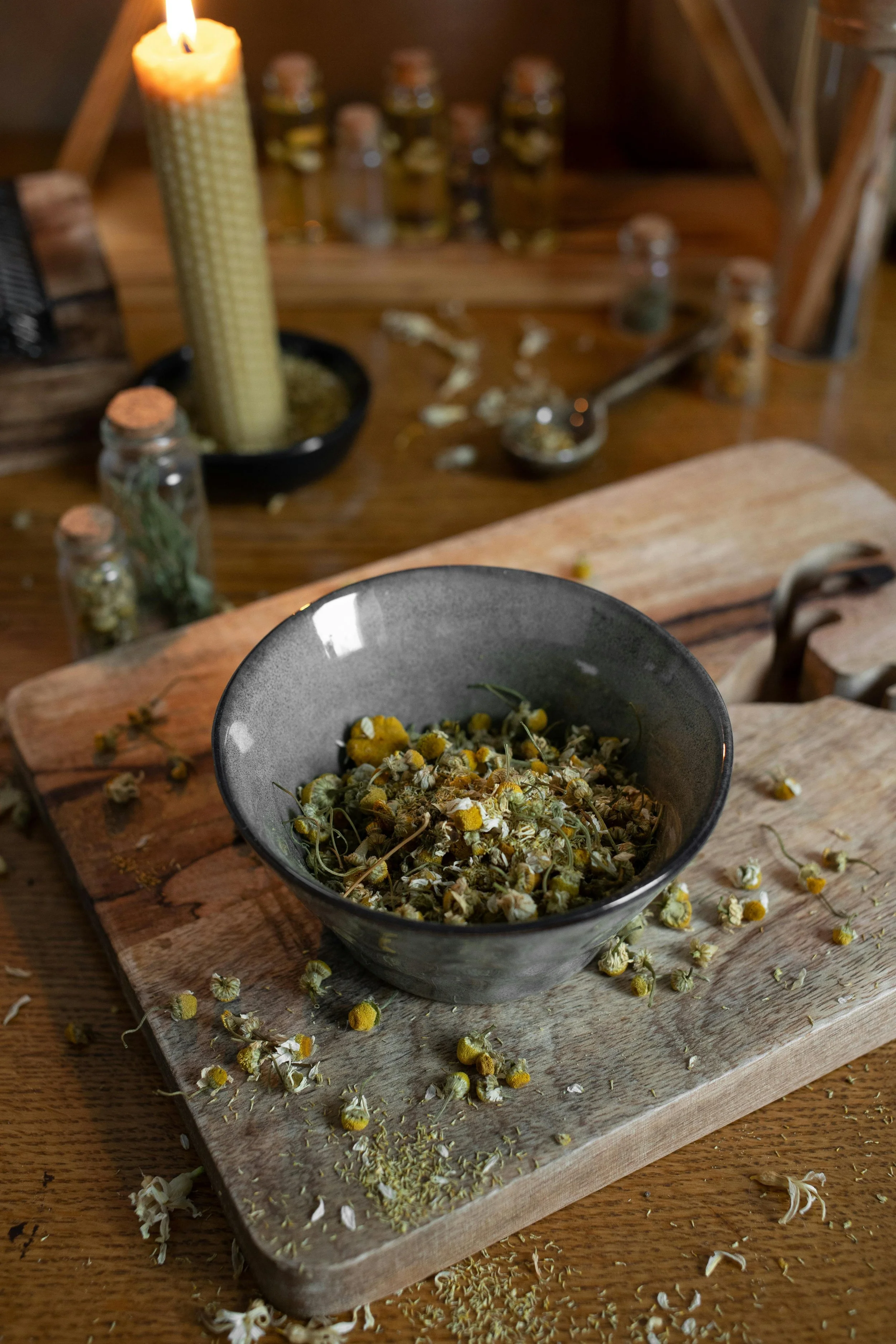
Chamomile (Matricaria chamomilla)
Chamomile offers gentle nervous system and digestive support. It can help ease cramping that is closely linked to stress, anxiety, or emotional tension.
This herb is particularly supportive for women whose menstrual pain worsens during times of overwhelm. Chamomile tea can be a soothing ritual in the evening, inviting rest and relaxation during menstruation.
Cramp Bark (Viburnum opulus)
Cramp bark is a more targeted herbal ally for acute menstrual pain. Traditionally used to relax smooth muscle tissue, it can be helpful for intense uterine cramping.
This herb is often taken as a tincture (2-3 dropperfuls up to 4 times per day) at the onset of extreme menstrual cramps, rather than a tea, and is best used short-term or as needed. Because of its potency, it is generally recommended to work with an herbalist when using cramp bark regularly.
Beyond Herbs: Additional Natural Tools for Menstrual Care
While herbs form the foundation of many natural menstrual support practices, healing the menstrual experience often benefits from a more holistic approach, as the body, nervous system, and emotional landscape are deeply intertwined.
Below are a few complementary practices that can enhance the effectiveness of herbal support.
Menstrual Meditation and Womb Healing Practices
Menstrual meditation invites conscious rest and inward listening during bleeding days. By slowing down and bringing awareness to the womb space, many women experience reduced pain and a deeper sense of connection.
Womb healing meditations often focus on breath, visualization, and gentle attention to the pelvic bowl. These practices can support relaxation of the uterine muscles and help release held tension, trauma, or emotional residue.
Even a few minutes of intentional stillness can shift the nervous system into a more receptive state, allowing herbs and the body’s natural rhythms to work more effectively.
I have a free downloadable menstrual meditation here. Or follow me on Insight Timer for other embodiment and womb healing practices.
Journaling as Cycle Support
Journaling during your period can be a powerful tool for emotional processing, connecting with your intuition, and self-understanding. Because of the brain wave changes that happen during menstruation, your intuition is particularly heightened while you are bleeding. Writing allows thoughts, feelings, and insights to move out of the body rather than being held internally, and often helps cultivate deeper clarity and purpose in your life.
Simple prompts such as What is asking for my attention right now? or What feels tender in my body today? can deepen awareness and reduce internal pressure.
Over time, journaling can also help identify cyclical patterns and recurring needs across the menstrual cycle. Journaling is a foundational aspect of the practice of Menstrual Cycle Awareness, in which you track your emotions, energy levels, physical symptoms, and more across the entirety of the menstrual month, to get a sense of your unique cyclical nature and align your life to your body’s ever-changing ebbs and flows.
If this practice speaks to you, you can grab my free guide to journaling through each phase of your cycle here.
Nervous System Support Practices
Menstrual pain is often intensified when the nervous system is in a state of stress or vigilance. Gentle nervous system regulation can significantly reduce discomfort.
Practices such as slow diaphragmatic breathing, extended exhalations, and lying with knees supported can help signal safety to the body. Warmth — such as a heating pad or warm tea — also plays an important role in supporting parasympathetic relaxation.
These practices are not about forcing the body to relax, but about creating the conditions where relaxation can naturally emerge from a place of safety and support.
Honoring Your Body’s Intelligence
Natural remedies for your period are most effective when approached as a relationship rather than a quick fix. Herbs, meditations, journaling, and nervous system practices all work best when they are used consistently and with attunement.
Every body is different, and what supports one woman may feel different for another. Listening closely, experimenting gently, and honoring your body’s responses are key components of cyclical self-care and greater feminine embodiment.
Your period is not a problem to solve.
It is a messenger and an invitation into deeper self-connection — one that deserves patience, reverence, and support.
Finally, if you are struggling with your period and wish to heal your cycle or establish a more conscious relationship with this vital aspect of your femininity, I offer 1:1 somatic menstrual cycle mentoring. You can explore all my services here.
About Ebb & Flow: Ebb & Flow is the holistic women’s mentoring practice of Emma Brinkman. Through menstrual education, women’s mentoring, ritual, herbalism, and somatic practice, Ebb & Flow works to connect women to the power and wisdom within their bodies, in order to live more easeful, sensual, vibrant, and empowered lives. Follow along to stay up-to-date on blog posts and articles, and check out all of Emma’s offerings, which include 1:1 mentoring, monthly online women’s circles, online courses, and custom ritual guidance for navigating life’s transitions.
